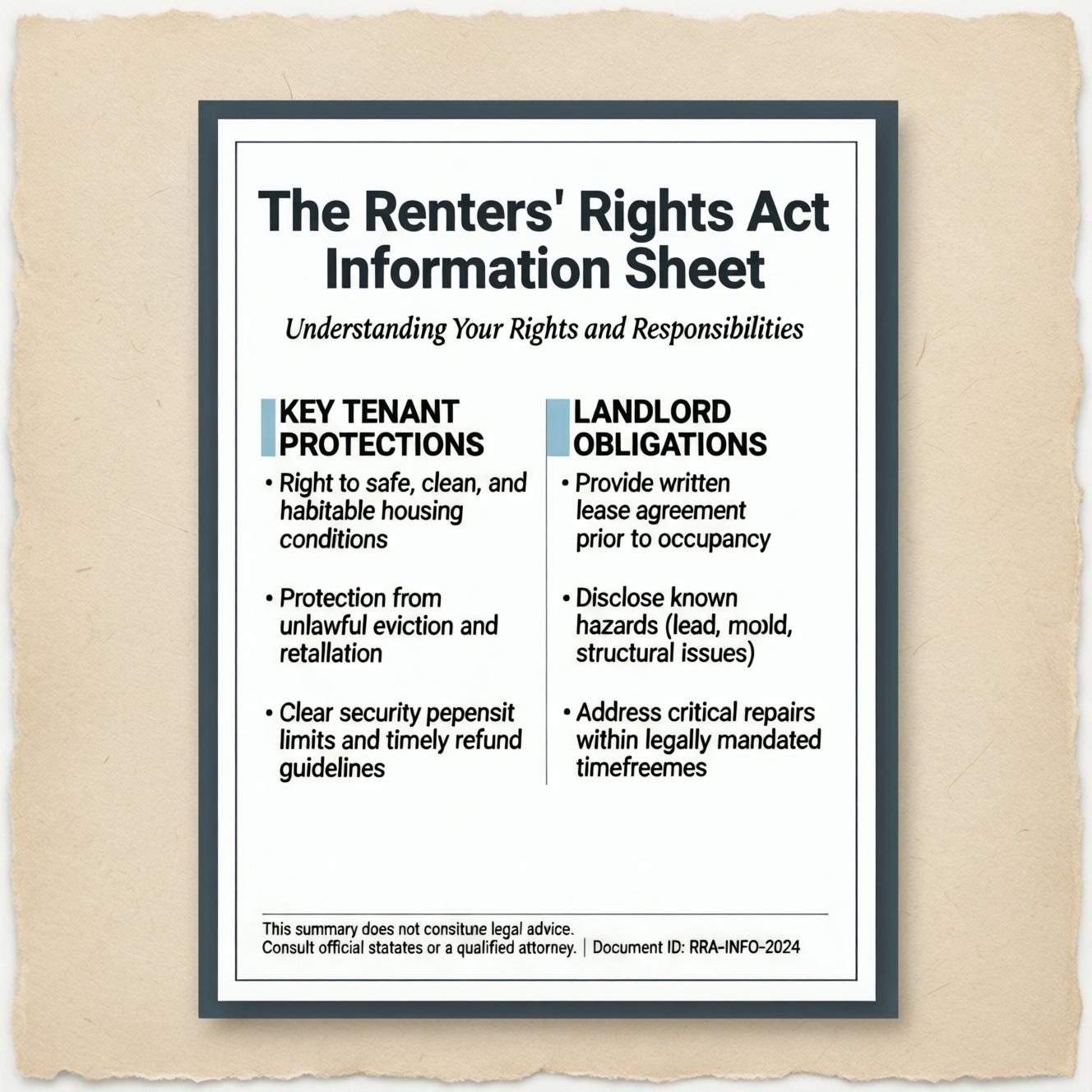
The Renters’ Rights Act Information Sheet 2026: What Landlords and Tenants in England Need to Know
The Renters’ Rights Act 2025 introduces major reforms to England’s private rented sector, set to take effect from 1 May 2026. To help both landlords and tenants understand these sweeping changes, the UK government has created an official guidance document — the Renters’ Rights Act Information Sheet 2026. This document, published by the Ministry of Housing, Communities and Local Government, must be provided to tenants of most private rented homes in England by 31 May 2026.
This article explains what the Information Sheet is, why it matters, and how both landlords and tenants should prepare, ensuring full compliance and peace of mind.
What Is the Renters’ Rights Act Information Sheet 2026?
The Renters’ Rights Act Information Sheet 2026 is a government-issued guide summarising the new rules introduced under the Renters’ Rights Act 2025. According to official guidance on gov.uk, landlords or their letting agents must give this document to tenants of assured or assured shorthold tenancies that were created before 1 May 2026.
The Information Sheet outlines how existing tenancies will automatically be affected by the new legal framework that begins in May 2026. It explains key reforms, including the end of fixed-term tenancies, the abolition of Section 21 “no-fault” evictions, and new limits on rent increases. These changes are automatic — landlords do not need to amend tenancy agreements for them to apply.
Why the Information Sheet Is Mandatory
The government has made the distribution of this document a legal requirement. Every landlord or letting agent must serve the exact PDF version available on the government website — not a copy-and-paste or a link. Landlords must either hand-deliver a printed copy or email/text the official PDF as an attachment.
Failing to provide the Information Sheet to tenants named on the tenancy agreement by 31 May 2026 could result in a civil fine of up to £7,000 gov.uk.
This obligation applies to any tenancy that:
- Is an assured or assured shorthold tenancy
- Was created before 1 May 2026
- Has a written or partly written record of terms
If the agreement is purely verbal, the landlord must instead provide written information setting out the key tenancy terms. Lodgers and residents in social housing are excluded from this requirement.
Key Reforms Explained in the Information Sheet
The official Information Sheet PDF provides tenants with a concise overview of the changes that will apply from 1 May 2026. Here are the most significant reforms:
1. End of Fixed-Term Tenancies
As of May 2026, fixed-term tenancy agreements will no longer exist. All tenancies will automatically become periodic (rolling). This means that a tenancy will continue month-to-month (or weekly/fortnightly, depending on the previous terms) until either:
- The tenant ends it by giving notice
- The landlord ends it for a valid legal reason
- Both parties agree to end it
The idea is to increase flexibility for tenants while maintaining stability for landlords.
2. Abolition of “Assured Shorthold Tenancies”
The term “Assured Shorthold Tenancy (AST)” will be abolished. All ASTs will convert to Assured Periodic Tenancies from 1 May 2026, without affecting the status or continuity of the tenancy. This simplifies the private rented sector and standardises tenancy rights across the board.
3. End of Section 21 “No-Fault” Evictions
One of the biggest changes is the abolition of Section 21 under the Housing Act 1988. Previously, this allowed landlords to regain possession of a property without giving a reason. From 1 May 2026, landlords must instead use Section 8 possession grounds, which require a valid reason — such as rent arrears, selling the property, anti-social behaviour, or moving in personally.
This change increases renters’ security and ensures landlords act fairly and transparently when seeking possession.
4. Control on Rent Increases
The new Act limits rent increases to once per year and bans “rent bidding”, where tenants offer more than the advertised rent. Tenants will also have the right to challenge unfair rent rises through a tribunal process. This gives more predictability and protection from sudden cost spikes.
5. Transitional Rules for Existing Tenancies
Tenancies that start before 1 May 2026 but continue beyond that date will automatically transition under the new system. However, if a landlord serves a possession notice (under sections 8 or 21) before 1 May 2026, the old rules may still apply during the transition period.
How to Serve the Information Sheet Correctly
To comply with the law, landlords or their agents must:
- Download the official PDF directly from the government website.
- Deliver it to tenants (either printed and posted/delivered by hand, or emailed/texted as an attachment).
- Provide a copy to every tenant named in the agreement.
- Do not send just a link — this will not meet legal requirements.
- Do this by 31 May 2026.
It’s recommended to act as early as possible to avoid last-minute compliance issues and potential fines.
For landlords who manage multiple properties, ensuring timely delivery will demonstrate professionalism and minimise risk.
What Tenants Should Do When Receiving the Sheet
If you are a tenant, receiving the Renters’ Rights Act Information Sheet 2026 means your landlord is fulfilling their legal obligation. Take time to read the document carefully to understand:
- How your tenancy will change from 1 May 2026
- The new rights you’ll gain
- How rent increases and tenancy termination will work going forward
Remember: you do not need to sign or return the form. It is purely informational, but its contents are legally binding.
Why the Information Sheet Matters
The 2026 reforms mark the biggest overhaul of England’s private rental laws in decades. The Information Sheet ensures both landlords and tenants understand how their relationships will change under the new law.
By standardising tenancies, abolishing unfair eviction routes, and enforcing strict rent procedures, the Renters’ Rights Act 2025 aims to create a fairer, more balanced private rented sector.
For landlords, complying with the Information Sheet rule demonstrates good faith and legal diligence. For tenants, it’s an assurance that your housing rights are protected.
Final Thoughts
The Renters’ Rights Act Information Sheet 2026 isn’t just a formality — it’s a cornerstone of communication in this period of transition. Landlords must treat it as a mandatory compliance document, not an optional extra.
To download and serve the correct version, always use the official page on gov.uk, where the legitimate PDF is hosted.
Get ahead of the deadline, understand your new rights or obligations, and be ready for the future of renting in England — a system built on transparency, fairness, and accountability.
Download here Failing to provide the Information Sheet to tenants named on the tenancy agreement by 31 May 2026 could result in a civil fine of up to £7,000 gov.uk.